Wax Aftercare Do's and Don'ts: The Complete Guide to Post-Wax Skin Care

A great wax is only half the equation. What you do in the hours and days after your appointment determines how good your skin looks and feels, how long your results last, and whether you stay smooth and bump-free or end up dealing with irritation. The good news: aftercare is simple, and once you know the rules, it becomes second nature.
We've been waxing Utah since 2007, and we send every client home knowing how to care for their skin. Here's the complete guide — the do's, the don'ts, what's normal, and how to keep your results looking their best between appointments.
Why aftercare matters: the first 24 to 48 hours
Right after waxing, your skin is in a temporarily vulnerable state. Removing hair from the follicle leaves the follicle openings briefly open, and the surface of the skin is freshly exfoliated and more sensitive than usual. For roughly the first 24 to 48 hours, that combination means your skin is more reactive — more prone to irritation, more susceptible to bacteria getting into open follicles, and more easily damaged by heat, friction, or sun.
Almost all of the aftercare rules below come back to one idea: give your skin that day or two to calm down and let the follicles close, and you'll avoid the small problems that can otherwise crop up. Treat freshly waxed skin gently, and it rewards you.
The don'ts: what to avoid for the first 24–48 hours
For about two days after your wax, steer clear of the following.
Heat. Skip hot showers, hot baths, saunas, steam rooms, and hot tubs. Heat further irritates already-sensitive skin and can encourage bacteria in warm, moist environments. Lukewarm or cool water is your friend right now.
Intense, sweaty exercise. Hard workouts produce sweat, which can irritate open follicles and freshly waxed skin, and the friction doesn't help either. Give it a day or two before you return to spin class or a hard run. Gentle movement is fine; a sweat-soaked session is what to avoid.
Swimming. Pools (chlorine), hot tubs, lakes, and the ocean all expose vulnerable follicles to chemicals and bacteria. Wait at least 24 to 48 hours before getting back in the water.
Sun and tanning. Freshly waxed skin is more prone to sun damage, and sun exposure too soon can lead to irritation or, over time, dark spots (hyperpigmentation). Avoid direct sun and stay out of tanning beds for at least 24 to 48 hours. After that window, sunscreen on exposed areas is always a smart habit.
Tight clothing and synthetic fabrics. Tight jeans, shapewear, and non-breathable fabrics trap heat and create friction against tender skin, which can cause irritation and trap hairs. Loose, breathable cotton is ideal for the first day or two — another reason to wear something comfy to your appointment.
Sex, for a Brazilian or bikini wax. Give the area 24 to 48 hours to settle and the follicles to close, which helps prevent irritation and reduces the risk of bacteria entering open follicles.
Touching, scratching, or picking. Your hands carry bacteria, and freshly waxed skin can feel tempting to scratch as it settles. Resist. Scratching and picking are how minor irritation turns into a real problem.
Aggressive exfoliation or active skincare on the area. Don't exfoliate the same day you wax, and hold off on strong actives (retinoids, acids) on waxed skin for a few days. The skin has just been exfoliated by the wax itself; piling on more is too much.
Heavy, fragranced products. Skip perfumed lotions, oils, and deodorants (after underarm waxing) right away — fragrance and certain ingredients can sting and irritate. Reach for something gentle and fragrance-free instead.
The do's: how to care for freshly waxed skin
Now the gentle, helpful side of the equation.
Wear loose, breathable clothing. Especially after a Brazilian or bikini wax, give the area room to breathe. Cotton underwear and relaxed clothing prevent friction while your skin settles.
Keep the area clean and cool. A lukewarm or cool rinse is perfect. Pat dry gently with a clean towel rather than rubbing.
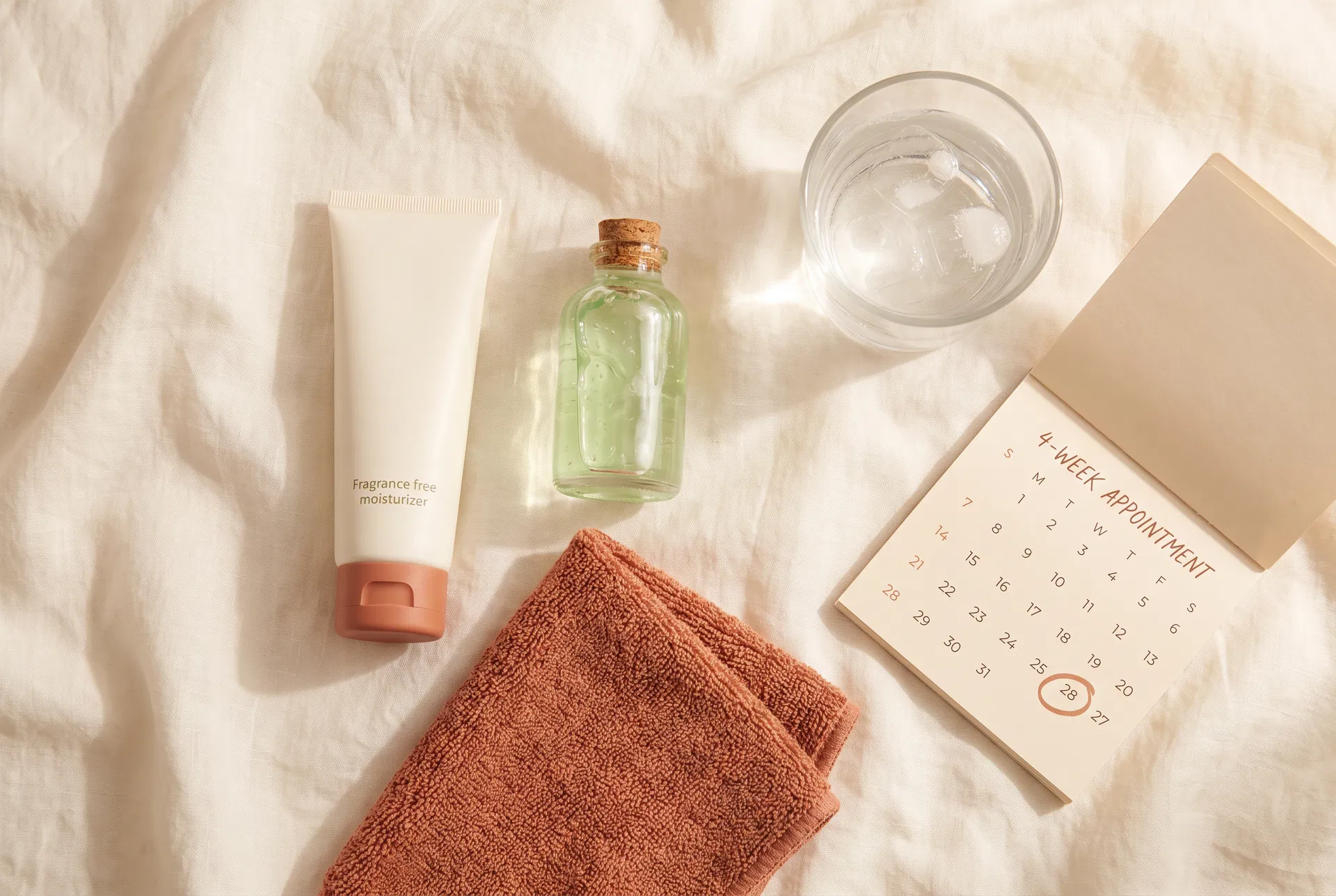
Soothe if you need to. If your skin feels tender or looks pink, a little pure aloe vera gel or a gentle, fragrance-free moisturizer can calm it. Cool compresses help too. You usually won't need much — most redness fades on its own.
Use sunscreen once you're past the initial window. After the first day or two, protect any waxed areas that see sunlight. This guards against irritation and helps prevent dark spots.
Hydrate your skin daily going forward. Well-moisturized skin stays supple, and supple skin makes future waxes more comfortable and helps prevent ingrown hairs. A lightweight, fragrance-free lotion applied daily (after the first day) is the move.
What's normal — and what's not
A little reassurance, because knowing what to expect keeps you from worrying over things that are completely routine.
Normal, and nothing to worry about:
- Redness in the waxed area, lasting anywhere from a few minutes to a day or so depending on your skin's sensitivity.
- Mild tenderness or warmth for a few hours.
- Small bumps right after, which are usually just temporary irritation from the follicles reacting; these typically settle within a few hours to a couple of days.
- A few stray hairs appearing days later. These are hairs that were below the surface during your wax and have since emerged — not a sign of anything done wrong. They'll be caught at your next appointment.
Worth knowing about: folliculitis. A small percentage of people — most often first-time bikini and Brazilian clients — can develop tiny whitehead-like bumps along the waxed area. This is folliculitis, and it's caused by the freshly opened follicles reacting in the day or two after waxing. It's usually mild and clears up on its own within several days, and good aftercare (keeping the area clean, loose clothing, not picking) helps it along. It's a known, manageable thing, not a sign that waxing isn't for you.
When to check in with a professional. If you notice signs of a genuine skin infection — spreading redness, warmth, pus, significant swelling, or pain that worsens rather than improves over a couple of days — that's beyond normal post-wax irritation, and it's worth contacting your esthetician or a healthcare provider. This is uncommon, but worth knowing.
Days three and beyond: the routine that prevents ingrown hairs
Once you're past the initial 48 hours, your aftercare shifts from "protect" to "maintain" — and this is where you actually prevent the most common post-wax annoyance: ingrown hairs.
An ingrown hair happens when new hair grows back into the skin instead of out through the follicle, usually because a layer of dead skin is blocking its path. The fix is mostly about keeping that path clear.
Exfoliate two to three times a week. Starting a few days after your wax, gently exfoliate the waxed areas a couple of times a week — a soft body scrub, an exfoliating mitt, or a salicylic-acid body wash all work. This sloughs away the dead skin that traps new growth. It's the single most effective thing you can do to prevent ingrowns. Don't overdo it, though; over-exfoliating irritates skin, so two to three times a week is the sweet spot.
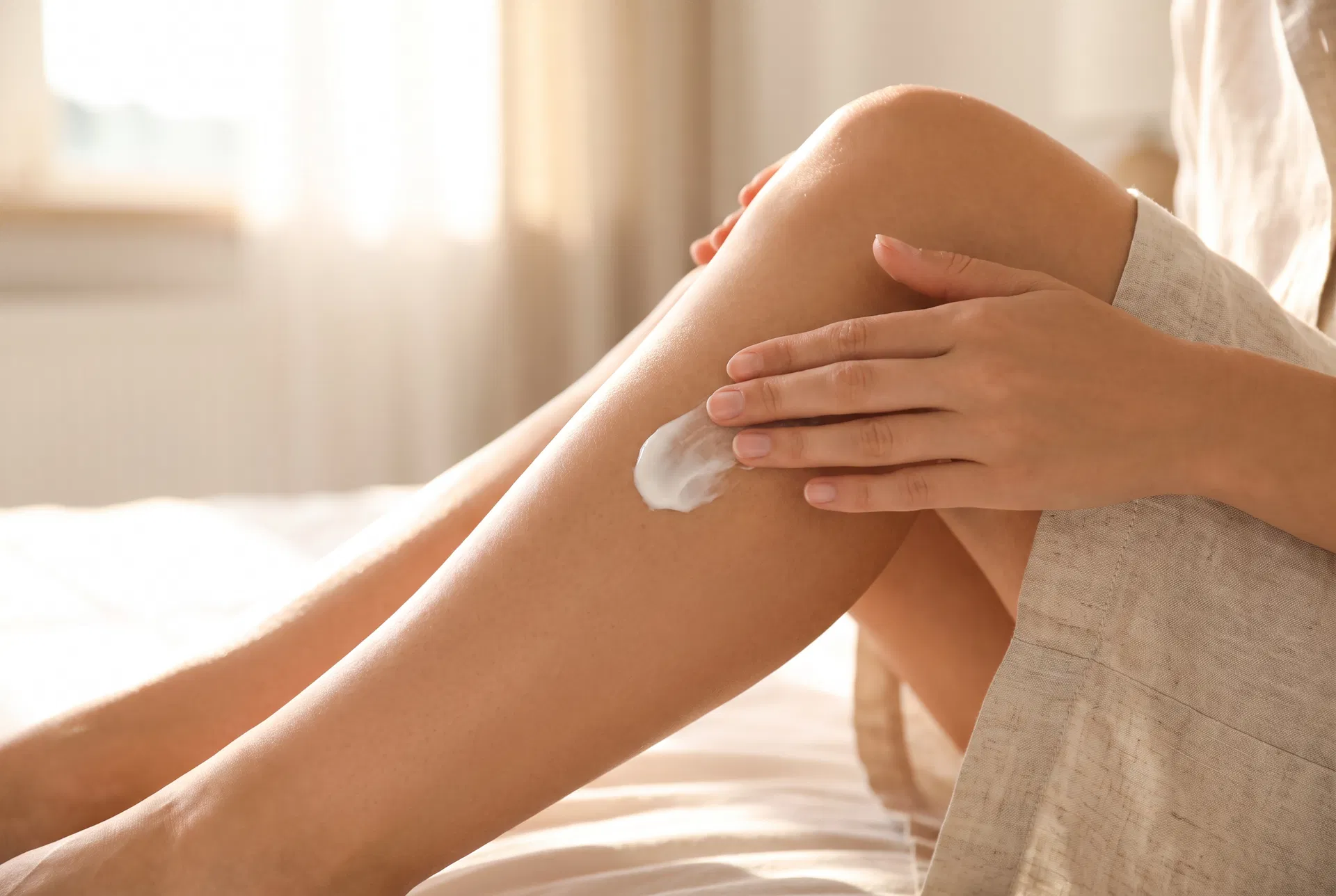
Moisturize daily. Hydrated, supple skin lets new hairs push through the surface more easily, while dry, tight skin creates resistance. Daily lotion keeps things smooth.
Hands off. Don't pick at or dig out bumps, and don't try to extract ingrowns yourself — that's how you get scarring and infection. Most resolve on their own with consistent exfoliation and hydration.
If ingrowns are a recurring frustration for you, it's worth a deeper read — and a conversation with your esthetician, who can tailor a plan to your skin.
The one rule that protects your results: don't shave between waxes
This deserves its own spot because it matters so much. The biggest mistake between appointments is reaching for a razor.
Your hair grows in cycles, and consistent waxing gradually gets your hair growing on the same schedule — which is what gives you longer-lasting smoothness and finer regrowth over time. Shaving between waxes interrupts that. It cuts hair off at the surface with a blunt tip (which is more prone to becoming ingrown), throws your growth cycles out of sync again, and essentially resets the progress you've made. Your next wax then feels more like your first.
So when you feel a little regrowth coming in, resist the razor and let it grow. That regrowth is exactly what your esthetician needs to keep you on track.
Keeping it up: rebook every 3–4 weeks
For most people, waxing results last about three to four weeks, though everyone's regrowth rate is a little different. Rebooking in that window — rather than waiting until you're fully grown out — keeps your hair on a consistent cycle, makes each appointment quicker and more comfortable, and keeps you smooth with the least hassle. Many clients simply book their next appointment before they leave so they don't have to think about it. You can book up to 60 days ahead, which makes it easy to plan around trips and events.
Aftercare notes for specific areas
The core rules above apply everywhere, but a few areas have their own small considerations worth knowing.
Bikini and Brazilian. This is the area where the first-48-hours rules matter most, because of the warm, enclosed environment and friction from clothing. Loose cotton underwear, skipping the gym and the pool, and waiting a day or two before sex all genuinely help here. It's also the area most prone to ingrowns, so the every-few-days exfoliation habit (starting a few days out) pays off the most.
Underarms. Hold off on deodorant or antiperspirant for the first 24 hours if you can — freshly waxed underarm skin is sensitive, and the ingredients can sting or irritate. Underarm hair grows in several directions, so a few stray hairs afterward are especially common and nothing to worry about. Loose tops reduce friction.
Legs. Generally the easiest to care for, but they're also the most likely to see sun (shorts, dresses) and the most likely to get shaved "just to touch up" between waxes. Resist that razor, use sunscreen once you're past the initial window, and keep up with light exfoliation to keep skin smooth.
Face (lip, chin, brows). Facial skin is delicate and visible, so be gentle: skip strong actives (retinoids, acids) on the area for a few days, avoid heavy makeup right over freshly waxed skin for a few hours, and be diligent with sunscreen, since facial skin shows sun damage and dark spots readily.
Your quick-reference aftercare recap
For the first 24–48 hours, avoid: heat (hot showers, saunas, hot tubs), sweaty workouts, swimming, sun and tanning beds, tight or synthetic clothing, sex (for bikini/Brazilian), touching or scratching, exfoliating, strong actives, and heavy fragranced products.
For the first 24–48 hours and beyond, do: wear loose breathable clothing, rinse cool and pat dry, soothe with aloe or a fragrance-free moisturizer if needed, and use sunscreen once past the initial window.
From day three onward, maintain: exfoliate two to three times a week, moisturize daily, keep your hands off bumps, don't shave between waxes, and rebook every three to four weeks.
Stick that list on your mirror for the first few times and it'll quickly become automatic.
We'll set you up for success
At Wax Me Too, aftercare isn't an afterthought. Our estheticians take the time to explain exactly how to care for your skin based on what we waxed and your skin type, so you leave knowing precisely what to do. And because we use a single gentle, fragrance-free honey soft wax, we're starting you off as kind to your skin as possible.
Follow these simple do's and don'ts and you'll get the full payoff of your wax: smooth skin that lasts, fewer bumps and ingrowns, and an easier, more comfortable experience every time you come back.
Ready for your next wax — or your first? First-time clients get their Brazilian wax for $50 at any of our six Utah locations — Draper, Salt Lake City, South Jordan, Layton, Orem, and St. George. Book online and let us make smooth skin simple.
Related reading
- Before Care Guide: How to Prepare for Your Wax
- How Often Should You Get a Brazilian Wax?
- How to Prevent Ingrown Hairs After Waxing
Sources: Integrative and Mechanistic Approach to the Hair Growth Cycle and Hair Loss, National Library of Medicine (PMC9917549); American Academy of Dermatology — Hair removal; Cleveland Clinic — Ingrown Hair: Causes, Treatment & Prevention. Post-wax timing windows and exfoliation frequency reflect standard esthetician and dermatology practice; individual skin varies. This article is general education, not medical advice. If you notice signs of infection — spreading redness, warmth, pus, or worsening pain — contact your esthetician or a healthcare provider.