How to Prevent Ingrown Hairs: The Simple Routine That Works

Ingrown hairs feel random, but they're not. They follow rules — and once you know the rules, you can prevent the vast majority of them with a routine that takes just a few minutes a week. No expensive products, no complicated regimen. Just a handful of simple, consistent habits.
We've been helping Utah clients stay smooth since 2007, and this is the exact routine we coach people through. Follow it and you'll go from dreading regrowth to barely thinking about it.
First, the one idea behind everything
Almost every ingrown hair traces back to a single problem: a new hair can't break cleanly through the surface of the skin, so it curls back in or gets trapped underneath. Usually that's because dead skin cells have built up and blocked the follicle, or because the skin is too dry and tight for the hair to push through, or because the hair itself is coarse and curls back on its own.
So the entire prevention routine comes down to three jobs: keep the follicle clear (exfoliate), keep the skin soft (hydrate), and don't sabotage your progress (no shaving between waxes, less friction). Everything below is just the practical version of those three ideas.
The cornerstone: exfoliate two to three times a week
If you do only one thing, do this. Gentle, regular exfoliation removes the dead skin cells that clog follicles, which is what lets new hairs grow straight out instead of curling back under. Dermatologists consistently point to exfoliation as the core of ingrown-hair prevention.
How often. Two to three times a week is the sweet spot for most people. This is important: more is not better. Over-exfoliating irritates the skin, and that irritation can actually cause inflammation and dark spots — and won't help your ingrowns. Gentle and consistent beats aggressive and occasional every single time.
When to start after a wax. Wait until the initial sensitivity has passed — generally a few days after your appointment, not the same day. Freshly waxed skin has just been exfoliated by the wax itself, so piling on a scrub immediately is too much. Once your skin has settled, ease back into your two-to-three-times-a-week rhythm.
What to use. You have two good options, and many people use a mix:
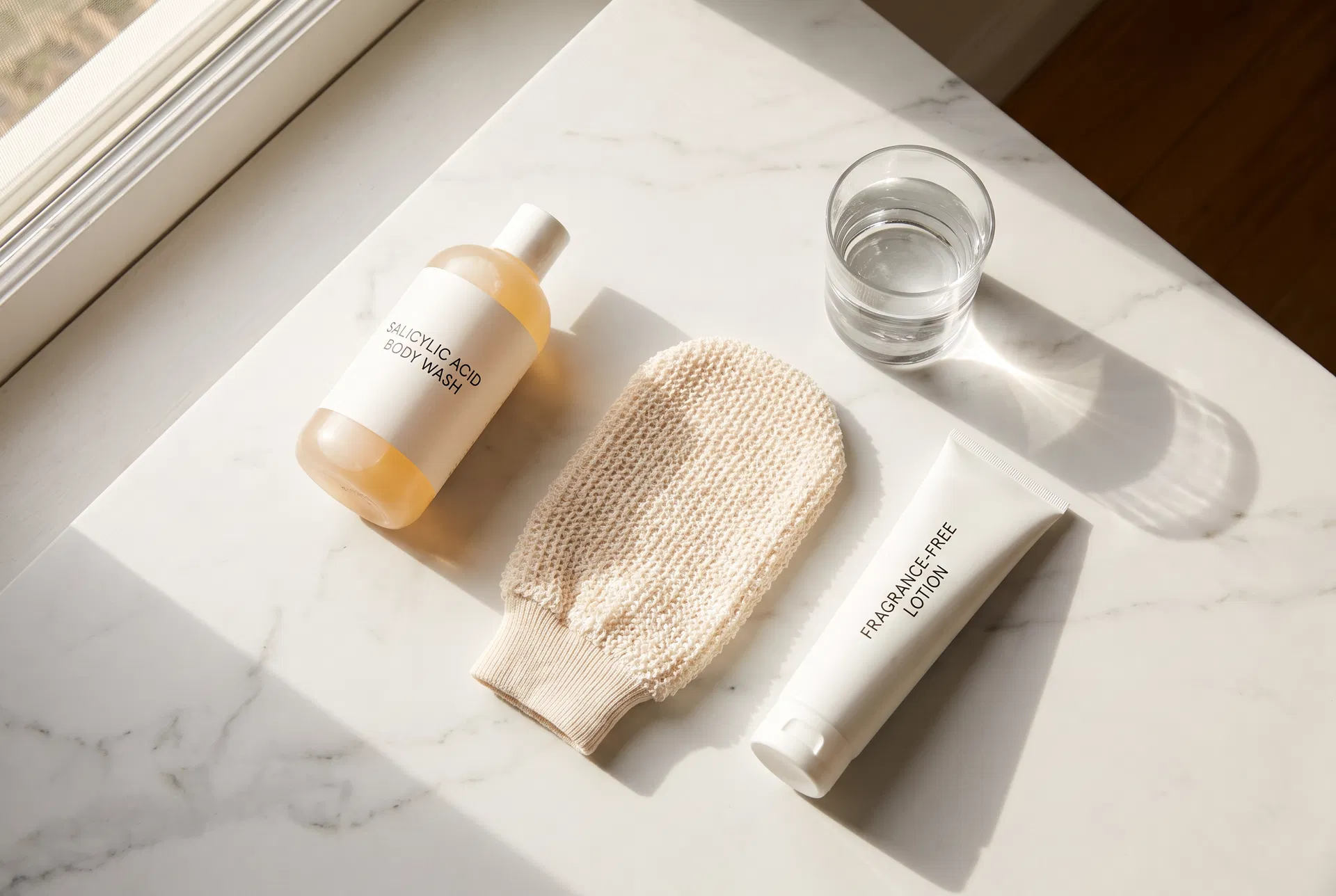
- Physical exfoliation — a soft washcloth, an exfoliating mitt or glove, a body brush, or a gentle sugar or salt scrub. Use warm (not hot) water and small, gentle circular motions. Let the texture do the work; you should never have to scrub hard.
- Chemical exfoliation — a body wash, lotion, or serum containing salicylic acid or glycolic acid. These dissolve the bonds holding dead skin cells together without any scrubbing, which makes them a great choice if you have sensitive or dry skin, or if physical scrubbing tends to irritate you. Dermatologists often suggest a gentle chemical exfoliant specifically for sensitive or dry skin.
Salicylic acid is especially worth knowing about for ingrowns: it's oil-soluble, so it can get into the follicle and help keep it clear — the same reason it's a staple in acne care. A salicylic-acid body wash used a few times a week in the shower is one of the easiest ways to build exfoliation into a routine you'll actually keep.
Be extra gentle in delicate areas. The bikini area and underarms have thinner, more sensitive skin than your legs. A soft mitt or a gentle chemical exfoliant is usually better there than a gritty scrub.
The partner habit: moisturize every day
Exfoliation clears the path; moisture keeps it open. Soft, supple, well-hydrated skin lets new hairs push through easily, while dry, tight skin creates resistance that traps them. So once you're past the first day after a wax, moisturize the area daily.
Reach for a lightweight, fragrance-free lotion or cream — fragrance can irritate freshly waxed or exfoliated skin, and you don't need it. Apply after showering, when skin is still slightly damp, to lock in the most moisture. Drinking enough water helps too: hydration works from the inside as well as the outside.
A nice bonus: some people use a product that does double duty, like a lotion containing a low level of glycolic or lactic acid, which gently exfoliates and moisturizes at once. If your skin tolerates it, that's an efficient way to cover two jobs in one step.
The rule that protects all your progress: don't shave between waxes
This one is non-negotiable if ingrowns are your concern. Shaving between waxes is one of the fastest ways to bring ingrowns roaring back, for two reasons. First, a razor cuts the hair off at the surface and leaves a blunt, sometimes sharp tip sitting right at skin level — exactly the kind of tip that catches and curls back into the skin. Second, shaving resets the finer-regrowth benefit you get from consistent waxing, putting coarse, ingrown-prone stubble right back on your skin.
So when you feel a little regrowth between appointments, resist the razor and let it grow. That regrowth is what your esthetician needs at your next visit, and letting it come in naturally is part of what keeps your skin clearer over time.
Reduce friction, especially right after a wax
Friction nudges growing hairs sideways and irritates follicles, which encourages ingrowns. You can cut it down easily:
- Wear loose, breathable clothing — cotton underwear and relaxed fits — particularly in the day or two after a wax when skin is most sensitive.
- Go easy on very tight leggings, shapewear, and synthetic fabrics that trap heat and rub, especially around the bikini line.
- After sweaty workouts, rinse off and change out of damp activewear rather than sitting in it, since trapped sweat and friction together are an ingrown's best friends.
Stay consistent with your waxing schedule
Consistency is quietly one of the most powerful ingrown-prevention tools you have. When you wax on a regular three-to-four-week schedule, your hair stays on a synced growth cycle and, over months, grows back progressively finer and sparser. Finer hair is far less likely to become ingrown than thick, coarse hair. So simply keeping your appointments — rather than letting everything grow out and starting over each time — steadily reduces your ingrown tendency on its own.
Before and after your appointment
A little timing around your wax helps too:
- A day or two before: a gentle exfoliation session clears dead skin so hairs release cleanly during your wax. Don't exfoliate the day of.
- Right after: keep the area clean and cool, skip heat and heavy sweating for 24 to 48 hours, and wear something loose. (Our full aftercare guide covers this in detail.)
- A few days after: resume your regular exfoliate-and-moisturize routine, and keep it up until your next appointment.
What to do if you get one anyway
Even with a great routine, the occasional ingrown slips through — that's normal. When it happens:
- Leave it alone. Don't pick, squeeze, or dig it out. That risks infection and scarring and tends to leave a dark mark that outlasts the bump by months.
- Keep gently exfoliating and moisturizing around the area to coax the hair out naturally. Most ingrowns resolve on their own within a week or two.
- A warm compress held over the spot for a few minutes can soften the skin and help the hair surface.
- See a professional if it becomes painful, fills with pus, looks infected, or doesn't clear within a few weeks.
A simple weekly rhythm to copy
If you want it boiled down to a routine you can actually remember:
- Daily: moisturize with a fragrance-free lotion; wear breathable clothing; drink water.
- 2–3 times a week: gently exfoliate in the shower (mitt or a salicylic-acid wash), using light circular motions.
- Never: shave between waxes, pick at bumps, or scrub aggressively.
- Every 3–4 weeks: keep your waxing appointment so your hair stays synced and grows in finer.
That's the whole routine. It's genuinely that simple, and it works.
The most common prevention mistakes
Over-exfoliating. Scrubbing daily or hard feels productive but backfires — it irritates the skin, can trigger dark spots, and can even break hairs below the surface. Two to three gentle sessions a week is plenty.
Exfoliating the day of your wax. Freshly waxed skin has already been exfoliated by the wax. Scrubbing it the same day is too much; wait a few days.
Skipping moisturizer. Exfoliation alone isn't enough. Without daily hydration, skin stays tight and hairs struggle to surface. The two habits work as a pair.
Shaving "just a touch" between waxes. Even an occasional touch-up with a razor reintroduces blunt, ingrown-prone tips and resets your progress. Commit to letting it grow.
Sitting in sweaty, tight clothing. Damp activewear plus friction is a reliable ingrown trigger. Change and rinse after workouts.
Giving up too soon. The finer-regrowth benefit of waxing builds over months. If you've only had one or two waxes, your skin hasn't reached its smoothest, least-ingrown-prone state yet. Consistency is the long game that pays off.
Choosing products that actually help
You don't need a cabinet full of things — a couple of well-chosen products cover it:
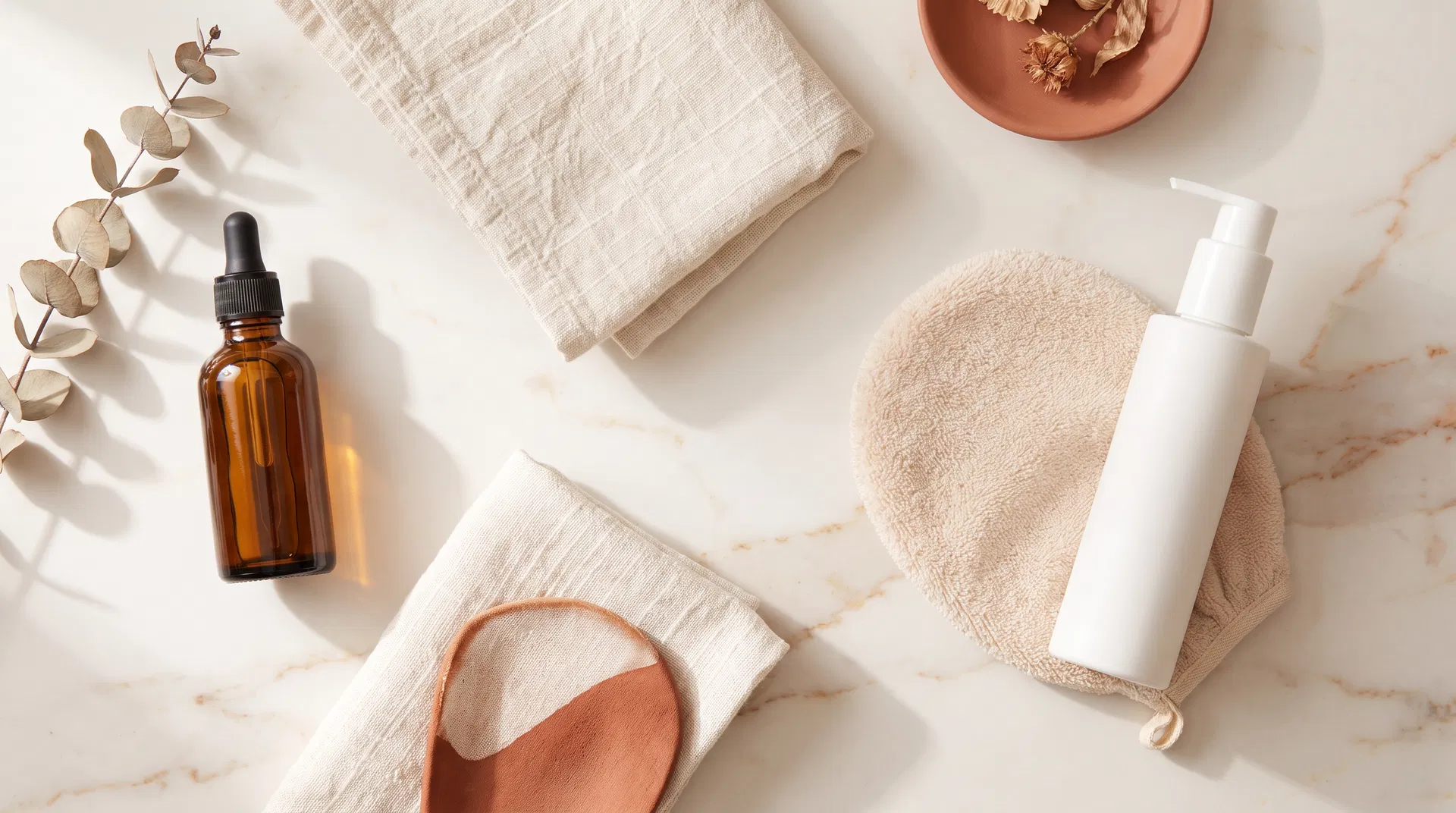
- A gentle exfoliant. Either a soft physical option (mitt, washcloth, fine sugar scrub) or a chemical one. For chemical, look for salicylic acid (oil-soluble, so it clears inside the follicle — great for the bikini area and anyone prone to clogged pores) or glycolic acid (a surface exfoliant that smooths and brightens). A salicylic-acid body wash is the lowest-effort way to build this in.
- A fragrance-free moisturizer. Fragrance is a common irritant on freshly waxed or exfoliated skin, so skip it. A simple lightweight lotion is perfect; a version with a low level of glycolic or lactic acid can exfoliate and hydrate in one step if your skin tolerates it.
- What to avoid: harsh, heavily fragranced scrubs; anything that stings or burns; and the urge to layer on strong actives (like retinoids) right after waxing.
If you have very sensitive skin, lean toward gentle chemical exfoliants over gritty physical scrubs — dermatologists often recommend exactly that for sensitive or dry skin.
A note for sensitive and darker skin tones
If you have sensitive skin, the golden rule is "gentle wins." Skip gritty scrubs in favor of a soft mitt or a mild chemical exfoliant, patch-test new products, and keep everything fragrance-free. Less friction, less heat, and slightly less frequent exfoliation will serve you better than anything aggressive.
If you have a darker skin tone, there's one extra reason to be gentle and consistent: ingrown hairs and over-exfoliation can both leave behind dark marks (post-inflammatory hyperpigmentation) that linger long after the bump itself is gone. The prevention routine here is your best defense — keeping follicles clear so ingrowns don't form in the first place, and never picking or scrubbing hard, which is what tends to cause those marks. Daily moisturizing and sun protection on exposed areas also help keep skin tone even. If discoloration is a concern for you, a dermatologist can recommend targeted ingredients, but consistent gentle care prevents most of it.
We'll tailor it to you
Everyone's skin is a little different, and part of what our estheticians do — beyond the wax itself — is help you dial in the routine that fits your skin type and the areas you have waxed. We use a gentle, fragrance-free honey soft wax that's kind to skin to begin with, and we've been coaching Utah clients on staying smooth since 2007. If ingrowns have been a recurring frustration, tell us at your next visit and we'll help you build a plan that fits your skin, your schedule, and the areas that give you the most trouble — and adjust it over time as your regrowth gets finer.
Ready to get smooth and stay smooth? New clients can ask about our first-time Brazilian wax special when booking. Book online at any of our six Utah locations.
Find your nearest Wax Me Too studio:
Draper · Salt Lake City · South Jordan · Layton · Orem · St. George
Read Next
Why You Get Ingrown Hairs After Waxing — and How to Stop Them
Understand the root causes of ingrown hairs, why waxing actually causes fewer than shaving over time, and what you can do to keep skin smooth and bump-free.
Related reading
- Why You Get Ingrown Hairs After Waxing — and How to Stop Them
- After Your Wax: The Do's and Don'ts of Aftercare
- Ingrown Hair, Folliculitis, or Razor Bump? How to Tell the Difference
Sources: Cleveland Clinic — Ingrown Hair: What It Looks Like, Causes, Treatment & Prevention; Cleveland Clinic — Home Remedies for Ingrown Hair; American Academy of Dermatology — Hair removal. This article is general education, not medical advice. If an ingrown hair becomes painful, filled with pus, or doesn't heal within a few weeks, contact a healthcare provider or dermatologist.