Soft Wax vs. Hard Wax: Why We Use Fragrance-Free Honey Soft Wax
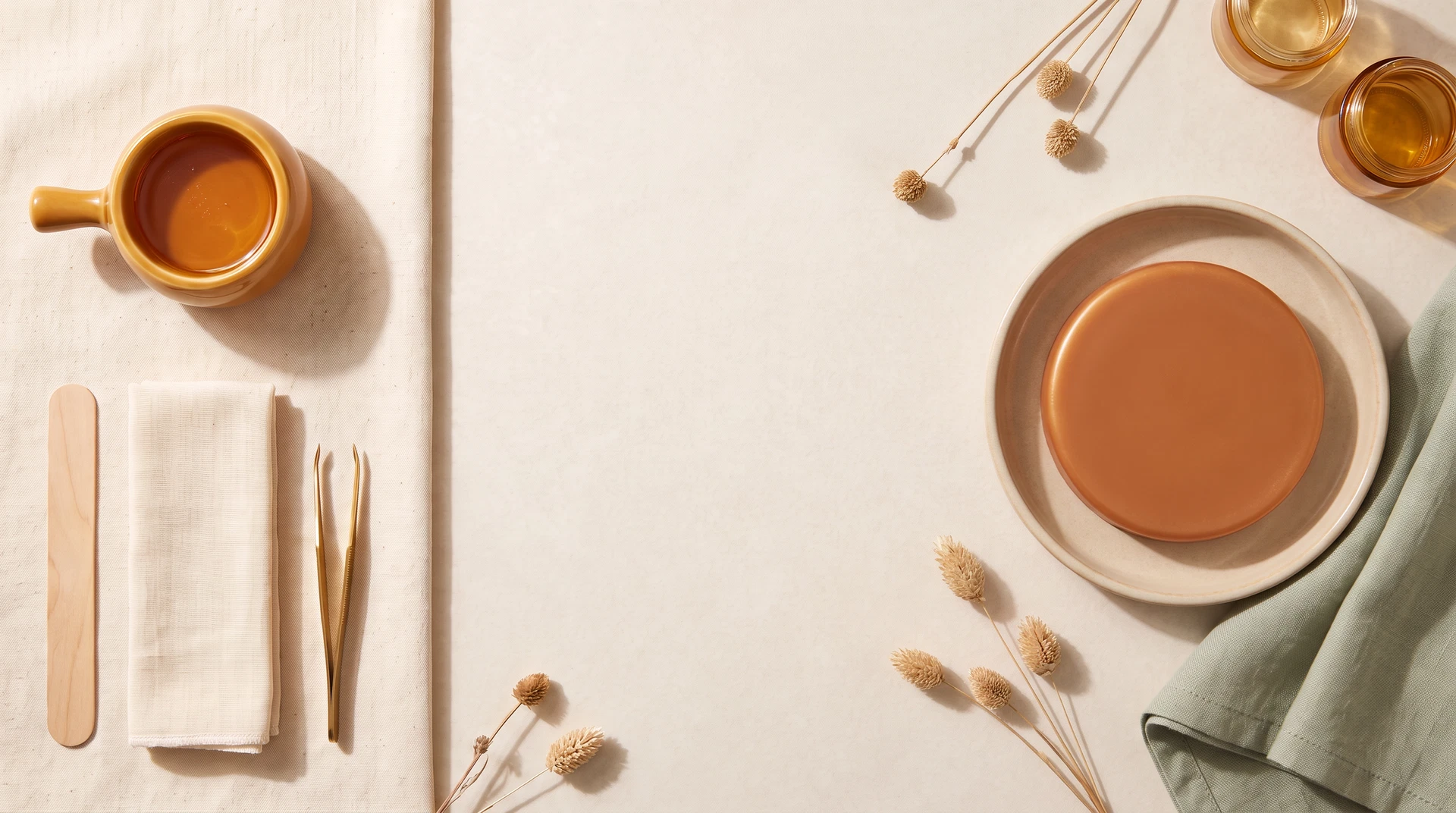
Soft wax vs. hard wax at a glance
- Soft wax uses a strip and offers efficient, exfoliating removal. Hard wax sets on the skin and is removed without a strip.
- Neither wax type alone determines a great result. Temperature, hygiene, skin preparation, and esthetician technique are central.
- Wax Me Too uses a fragrance-free honey soft wax with a detailed finishing step for gentle, complete removal.
If you've waxed at more than one studio, you may have noticed they don't all use the same kind of wax — and you may have wondered whether it matters. It does, a little. The two main types, soft wax and hard wax, work differently and have different strengths. Here's a clear, honest explanation of each, what the industry typically uses them for, and why we've built our approach around a fragrance-free honey soft wax.
We've been waxing Utah since 2007, and the wax we use is a deliberate choice we're happy to explain.
The two types, explained
Soft wax (also called strip wax) is applied to the skin in a thin layer in the direction of hair growth, then removed by pressing a cloth or paper strip over it and pulling it off against the direction of growth. The strip is what lifts the wax and hair away. Soft wax is typically made from ingredients like rosin, oils, and other additives, and because it adheres to the skin's surface as well as the hair, it removes a layer of dead skin along with the hair — meaning it exfoliates noticeably as it works.
Hard wax (also called stripless wax) is applied in a thicker layer and left to cool and harden for a few seconds. As it sets, it shrinks and grips the hairs, and then it's pulled off directly — no strip needed. Hard wax is usually made from ingredients like beeswax, resin, and oils. Because it adheres more to the hair than to the surrounding skin, it's often described as gentler on the skin in delicate areas.
What the industry typically uses each for
The conventional approach in many studios looks like this:
- Hard wax for smaller, more sensitive, coarse-haired areas — the face, underarms, and bikini line — where its grip-the-hair-not-the-skin quality is valued.
- Soft wax for larger areas like the legs, arms, back, and chest, where it can cover ground quickly and its extra exfoliation is a bonus.
That's a perfectly reasonable framework, and many excellent studios follow it. We want to be upfront that hard wax has genuine strengths, particularly its gentleness on sensitive skin. So why do we take a different route?
Why we use a honey soft wax — for everything
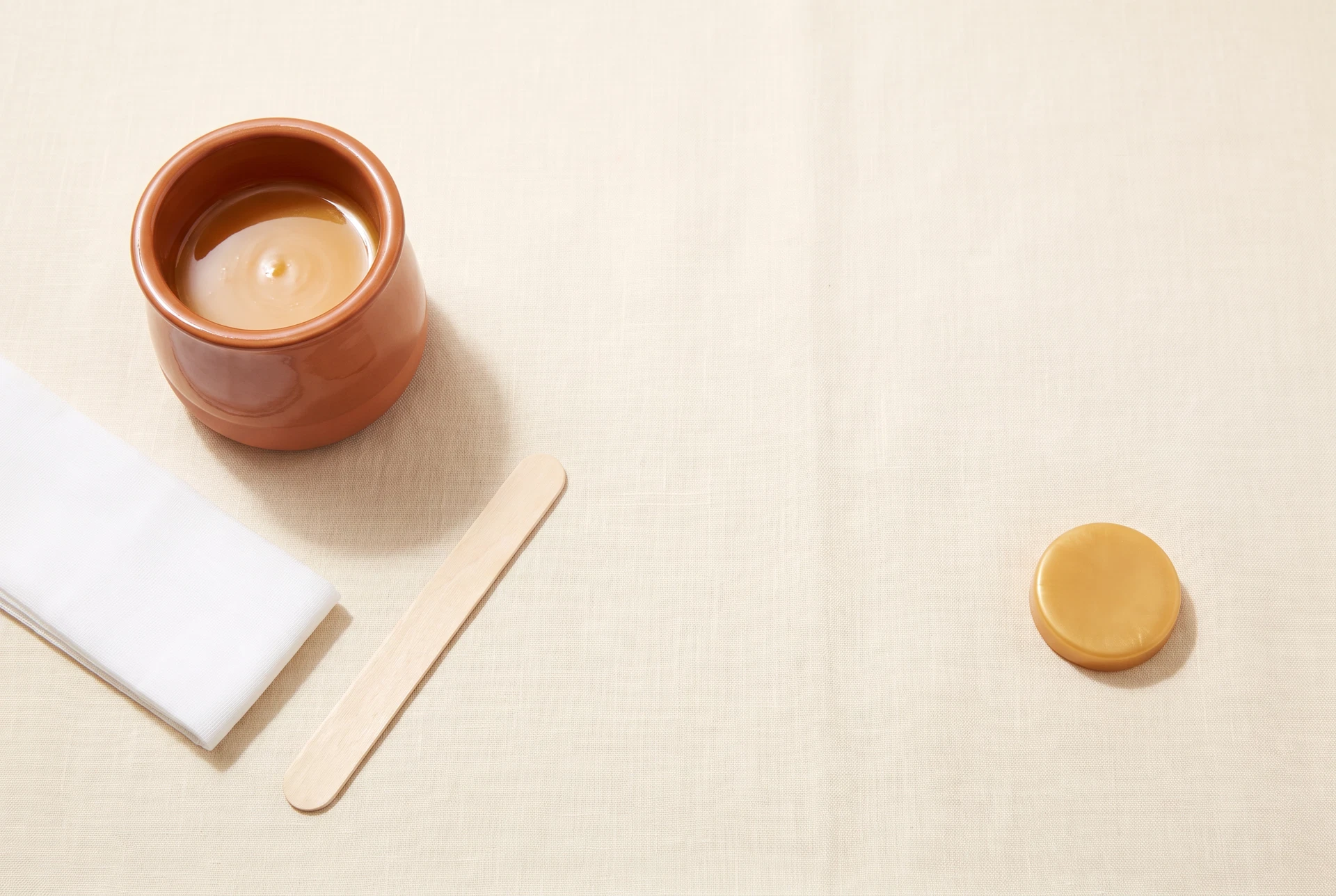
We've built our entire technique around a single high-quality honey soft wax, used across all our services including our most-requested one, the Brazilian. Here's our honest reasoning.
It removes hair completely — including the fine stuff. Soft wax's thin application grabs even short, fine hairs that thicker waxes can sometimes skip over. Paired with the right technique, that means a genuinely thorough removal.
The exfoliation is a real benefit. Because soft wax lifts a layer of dead skin along with the hair, you walk out not just hair-free but with smoother, brighter-feeling skin — and that exfoliation helps keep follicles clear, which is part of preventing ingrown hairs.
In skilled hands, it's fast. Soft wax lets an experienced esthetician cover an area efficiently. It's a big reason our Brazilian takes about 15 minutes — less time with your skin under tension, and you're done and on with your day.
We finish so there's no hair left behind. Whatever wax you use, technique and finishing are what separate a good wax from a great one. After waxing, we go over the area with tweezers to catch any strays, so your result is genuinely complete — not "mostly there."
We made it fragrance-free. This is the part we care about most for sensitive skin. Fragrance is one of the most common skin irritants, so our honey soft wax is fragrance-free. That choice does more for sensitive-skin comfort than the soft-versus-hard debate often gets credit for — it removes a frequent trigger entirely.
The honest trade-offs
We're not going to tell you soft wax is universally superior — that wouldn't be true, and the right answer genuinely depends on the studio, the wax, and the skill of the person using it. Here's the balanced picture:
- Hard wax's strength is gentleness on delicate skin and its no-strip, grip-the-hair removal, which many people love for sensitive areas.
- Soft wax's strengths are thorough removal of fine hair, stronger exfoliation, and speed over an area.
- The single biggest variable in either case is technique. A skilled esthetician using a quality soft wax can deliver a comfortable, complete Brazilian; an unskilled one with any wax can leave you red and patchy. The wax is the tool; the hand matters more.
What ties our choice together is that our team has been refining this specific technique since 2007. The wax and the method evolved together, and the fragrance-free formulation plus the tweezing finish are how we make a soft-wax Brazilian both gentle and complete.
What this means for your appointment
Practically speaking, here's what you can expect with our approach:
- A thin, comfortable application warmed to a skin-friendly temperature — not the too-hot wax that causes a lot of irritation elsewhere.
- Efficient, confident removal that keeps each section quick.
- A noticeable smooth-and-exfoliated feeling afterward, not just hair removal.
- A tweezed, brushed finish so you leave genuinely smooth.
- A fragrance-free product that's friendlier to sensitive skin.
If you've had a rough waxing experience somewhere else — overly hot wax, fragrance irritation, or being left with stubble — it may have been as much about product and technique as about waxing itself. A gentle, fragrance-free soft wax in experienced hands is a different experience.
Why technique matters more than the wax type
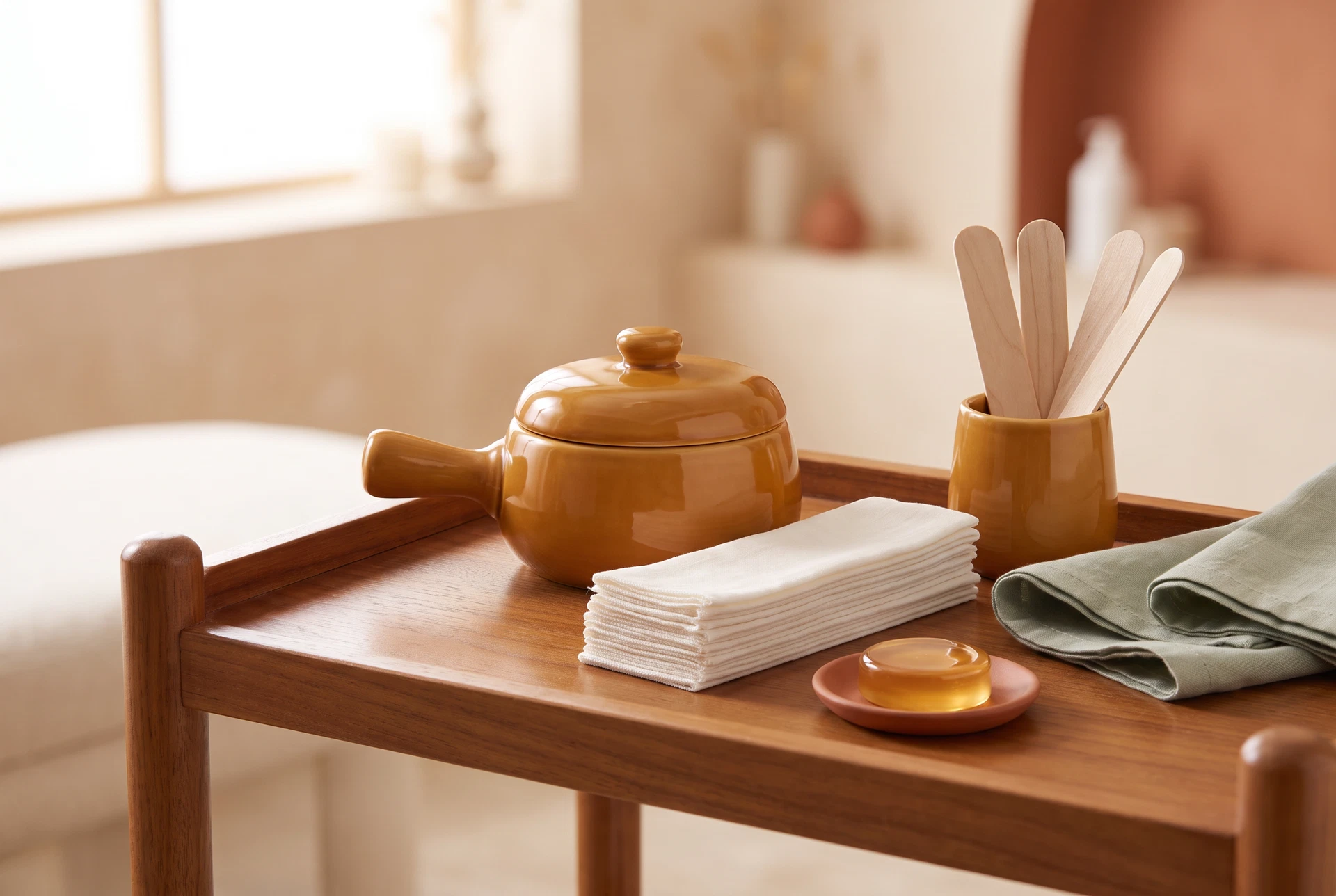
If there's one thing we want you to take from all this, it's that the wax is only part of the story — the technique is what makes or breaks your experience. The same jar of wax can produce a fast, comfortable, complete service in expert hands and a red, patchy, painful one in inexperienced hands. Here's what skilled technique actually involves:
Correct temperature. Wax that's too hot irritates and can even burn; wax that's too cool doesn't grip properly and tugs. An experienced esthetician knows exactly where it should be — warm and comfortable.
Thin, controlled application and proper skin support. Holding the skin taut and applying the right amount means the hair releases cleanly with far less sensation. This is a learned skill, not something the wax does on its own.
A fast, confident removal. The quicker and more decisive the pull, the briefer the sting. Hesitation is what makes waxing hurt; confidence is what makes it quick.
A thorough finish. Going back over the area with tweezers and a brush to catch strays is the difference between "mostly smooth" and genuinely complete. It's a step rushed services skip.
This is why we emphasize that we've refined our specific technique since 2007. The honey soft wax we use and the method we use it with developed together — the fragrance-free formulation, the temperature, the application, the tweezed finish — into one consistent, gentle, complete experience. The wax matters; the hand matters more.
A note on aftercare, whichever wax you've had
No matter which type of wax touched your skin, the aftercare is the same and it matters: skip heat, heavy sweat, swimming, and sun for 24 to 48 hours, wear loose clothing, and start gentle exfoliation a few days later to keep ingrowns away. Good aftercare protects the results of any wax.
A few myths about wax types, cleared up
"Hard wax doesn't hurt; soft wax does." Both involve the same root-level removal, so both create a brief sting. The sensation depends far more on the area, your hair, and the esthetician's technique than on the wax type. A skilled hand with soft wax is more comfortable than a rushed one with hard wax.
"Soft wax rips your skin; hard wax never does." Any wax, used incorrectly or applied too hot, can irritate skin. Proper temperature, a thin application, taut skin support, and a fast removal protect the skin — again, technique over type.
"Hard wax is automatically better for a Brazilian." It's a common default, and it's a fine choice — but it's not the only good one. A quality soft wax in experienced hands delivers a complete, comfortable Brazilian too. We've done several hundred a week this way since 2007.
"The wax type is the most important thing." It isn't. The most important factors are the esthetician's skill, the temperature and freshness of the wax, hygiene (no double-dipping), and the finishing touches. The wax is one ingredient in a much bigger recipe.
What to actually look for in a studio
Rather than fixating on soft versus hard, here's what genuinely predicts a good wax:
- An experienced, licensed esthetician — skill is the number-one factor in comfort and completeness.
- Clean, hygienic practice — a fresh applicator every time (no double-dipping), gloves, sinks, and clean linens.
- Appropriate wax temperature — warm and comfortable, never scalding.
- A thorough finish — does the studio go over the area to catch strays, or leave you with stragglers?
- Sensitive-skin considerations — fragrance-free options and a willingness to talk through your skin's needs.
If a studio nails those, the soft-versus-hard question becomes a detail rather than a dealbreaker.
Common questions
Does soft wax exfoliate more than hard wax? Generally yes — because soft wax adheres to the surface as well as the hair, it lifts more dead skin along with it, which is part of why it leaves skin feeling especially smooth.
Is fragrance-free really worth it? For sensitive skin, very much so. Fragrance is among the most common skin irritants, so removing it lowers the chance of a reaction more than most people expect.
Can soft wax handle coarse bikini hair? Yes, in skilled hands and with the right technique — its thin application grabs hair well, and a tweezed finish catches anything left.
Will I be left with stubble? Not if the wax is removed cleanly and finished properly. Our tweezing-and-brushing finish exists specifically to ensure no hair is left behind.
Is one wax type more hygienic? Hygiene comes down to practice, not wax type. What matters is that the studio never double-dips (a fresh applicator into the wax each time), uses gloves, and keeps clean rooms and linens. A studio with strict sanitation is hygienic whether it uses soft or hard wax; one that cuts corners isn't, regardless of the wax.
Can I request a specific wax? Absolutely — ask any studio what they use and why. A good esthetician will happily explain their choice and accommodate sensitive skin. At our studios, that's a fragrance-free honey soft wax used with a technique we've refined since 2007.
Does the wax type change how long results last? No. Longevity comes from removing hair at the root, which both soft and hard wax do, plus how consistent you are with your schedule. Results last about three to four weeks either way, with finer regrowth over time.
The bottom line
Both soft and hard wax are legitimate, effective tools, and a great studio can do beautiful work with either. We chose a fragrance-free honey soft wax because, combined with our technique and a tweezing finish, it gives us thorough removal, real exfoliation, speed, and gentleness on sensitive skin — the exact combination we want for every client. The wax matters, but the experienced hand using it matters more, and that's what we've spent since 2007 perfecting.
So if you've been wondering whether the type of wax should drive where you book, here's our honest answer: let it be a tiebreaker, not the deciding factor. Choose your studio on the strength of its estheticians, its hygiene, and how it treats your skin — and then enjoy the fact that, with us, that comes with a gentle, fragrance-free wax and a finish designed to leave nothing behind.
Curious how a gentle, complete wax should feel? New clients can ask about our first-time Brazilian wax special when booking. Book online at waxmetoo.com.
Find your nearest Wax Me Too studio — six women-owned waxing studios across Utah: Draper · Salt Lake City · South Jordan · Layton · Orem · St. George
Related reading
- Does a Brazilian Wax Hurt? An Honest Answer from Utah's Waxing Experts
- Sugaring vs. Waxing: What's the Difference, and Which Wins?
- Bumps After Waxing: What's Normal and What's Not
Sources & references
- Healthline — Sugaring vs. Waxing (hard wax: beeswax/resin/oils, removed after cooling without strips; soft wax: rosin/oils, removed with cloth/paper strips): https://www.healthline.com/health/beauty-skin-care/sugaring-vs-waxing
- American Academy of Dermatology — Hair removal (dermatologists' general guidance on waxing methods and skin care): https://www.aad.org/public/everyday-care/skin-care-basics/hair
- Integrative and Mechanistic Approach to the Hair Growth Cycle and Hair Loss (why consistent root-level removal produces finer regrowth over time), National Library of Medicine (PMC): https://www.ncbi.nlm.nih.gov/pmc/articles/PMC9917549/
This article is general education, not medical advice. Tell your esthetician about any skin sensitivities, allergies, or medications before your appointment.